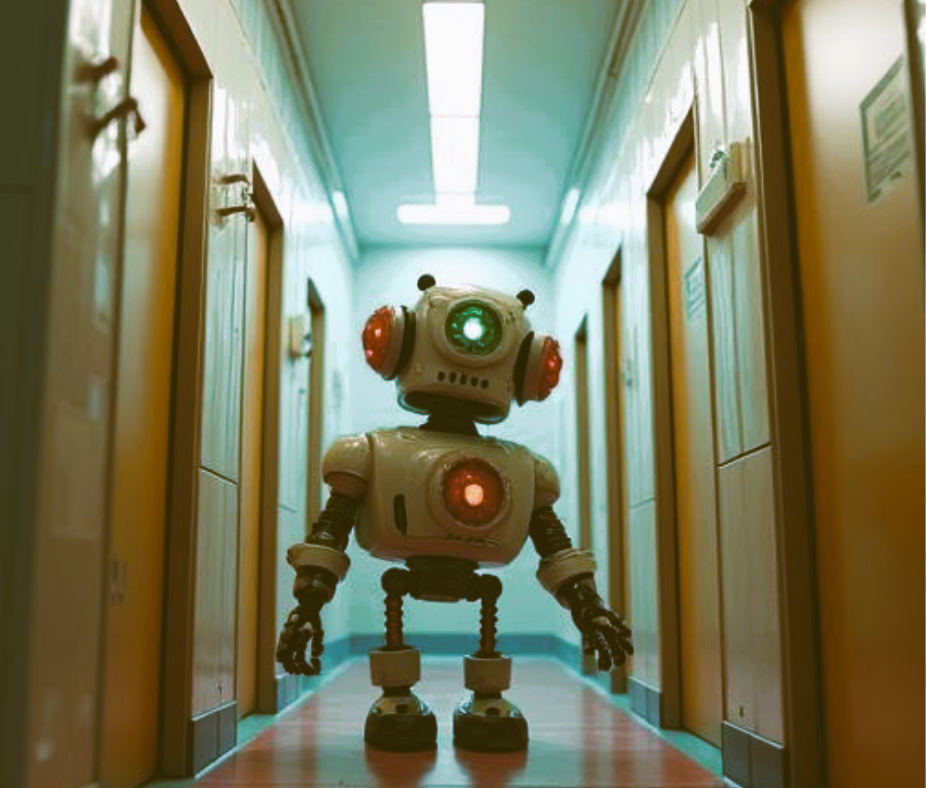
Posting on Social recently, my pattern recognition raised the alarm: Any post concerning topics I actually knew my way around, be it my profession, special interest or activism, was getting, at best, a couple of hundred views. A random post about AI got over 7000 views. I’m not an AI expert, I just had a hot take about someone else’s post, and the platform decided everyone had to see it.
So now I’ll try to see if my observation holds and whether I can, in fact, reach thousands of people with my opinions about the place where AI meets the autistic community.
It is likely that many autistic people, aware or not of their autism, have been involved in developing AI models, engines and applications. At the same time, the outcome that has been dubbed by frustrated feminists “the mansplaining machine” and shown by scientists to engage in bullshitting, because it speaks over-confidently about stuff it doesn’t know, and makes stuff up to fill the gaps as it goes along, is decidedly unautistic.
A big part of autistic culture and a prominent trait that gets us into trouble with hierarchies and figures of authority is that we aren’t prone to bullshitting. Unlike LLMs, whose declared purpose is to output whatever sounds plausible and socially accepted in its context, even if it isn’t, in fact, accurate or true, autistic folks have been getting into trouble for as long as humanity exists for telling the truth and giving accurate information even when socially ill-advised. Be it correcting your teacher at school, telling your partner you don’t like that haircut, or telling an executive that, according to the analysis they requested from you, users did not like their latest feature and it shouldn’t be rolled out to the public, our emphasis is on content over form, and we pay dearly for it. This makes it all the more frustrating, to see how eagerly the allistic world has been embracing sycophantic AI blabla, where form comes at the expense of content, even in fields where accuracy can mean life and death.
At least we can use it to help us write official correspondence and work emails, and, ironically, even ask the bot to check if a message we wanted to send sounds human enough. Where being slick is more important than being rigorous, AI has become a valuable tool that shoulders some of the burden of masking, and saves us some spoons by simplifying otherwise daunting tasks.
But while I can absolutely get AI to write my emails using gender-neutral, identity-first and non-pathologizing language, it still represents the majority society, with its neurotypical standards that are still as biased and marginalizing to us as any system built without autistic folks in mind.
This is also one of the reasons why AI can’t substitute the work dozens of prepped.to users have already done: adding new locations with sensory information you can only get by being an autistic person visiting the place and experiencing the sensory conditions there. AI may also not understand which service instructions and navigation peculiarities are worth mentioning from the autistic point of view, even if provided with such information. And one thing I don’t envision it being able to do any time soon is reporting about the toilet-use experience.
So thank you, dear contributing users who uploaded new locations!
And to any autistic person reading this: we still need your contributions too!
You can of course use AI to help you write your entries, but the important thing is that you tell it what their content should be, because we, as a community, value content over form (and also because I’m going to proofread your anonymous entries anyway, so you really don’t have to worry too much about form as it is).
